The Kuari Pass Trek, often celebrated as the “Gateway to Garhwal Himalayas, ” is one of Uttarakhand’s most iconic and breathtaking journeys—an experience that blends adventure, serenity, and Himalayan grandeur in one unforgettable path. Nestled in the heart of the Chamoli district, Kuari Pass stands as a dream destination for trekkers who wish to witness the awe-inspiring snow-clad peaks of the Indian Himalayas from some of the most spectacular viewpoints nature has ever crafted.
The trek traces its legacy back to the late 19th century when Lord Curzon, the then Viceroy of India, walked this very trail and opened it to the world; hence, it is also known as the Curzon Trail. Today, it remains one of the most recommended Himalayan treks for beginners and experienced trekkers alike—thanks to its moderate difficulty, stunning landscapes, and unmatched panoramic mountain views.
As you begin your journey toward Kuari Pass, you step into a world where nature paints every scene with precision. Verdant valleys, towering oak forests, ancient rhododendron trees, and gentle meadows welcome you with open arms. The trail guides you through charming Himalayan villages like Dhak, Tugasi, and Guling—each carrying the warmth of mountain culture, the simplicity of traditional life, and the smiles of local inhabitants. These villages offer a glimpse into the heritage and lifestyle of the Garhwali people, making the adventure both scenic and soulful.
One of the most mesmerizing highlights of the Kuari Pass Trek is its grand appearance of the mighty snow peaks. Nowhere else in Uttarakhand does a trek offer such a regal lineup of mountains in such proximity. As you rise higher, the mountains begin to reveal themselves—making every turn a picture-perfect moment. Nanda Devi, the second-highest peak in India, stands proudly at the center, while other legendary peaks such as Kamet, Hathi Ghoda, Neelkanth, Chaukhamba, Mukut Parvat, Dronagiri, and Trishul form a majestic skyline around you. This 180-degree Himalayan amphitheater is one of the biggest reasons Kuari Pass is considered a photographer’s paradise.
Walking ahead, the trek opens into the breathtaking Gorson Bugyal, a vast meadow carpeted with lush grass in summer and glistening snow in winter. Gorson is one of the most stunning alpine meadows in Uttarakhand, offering endless open landscapes where trekkers can enjoy sunrise, sunset, and night skies filled with millions of stars. The transition between forest, meadow, and snowy terrain adds an extraordinary variety to the experience.
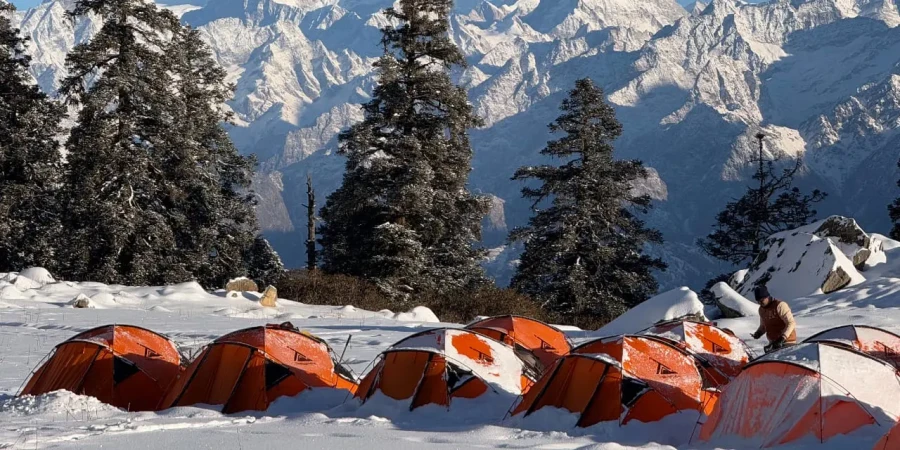
As you approach the summit ridge of Kuari Pass, the trail turns into a surreal snow-covered expanse during winter. Standing on the pass—at an altitude of around 12, 500 feet—you feel as if the mountains have drawn a curtain and revealed their full glory. The wind is crisp, the silence powerful, and the view absolutely spellbinding. It’s a moment of achievement, gratitude, and connection with nature.
Kuari Pass is not just about its scenery—it is about the emotional journey it creates. Whether it is your first Himalayan trek or one among many, Kuari Pass has a magical charm that leaves a lasting impact. The trek offers the perfect balance of challenge and comfort, making it ideal for beginners, families, and even seasoned trekkers looking for a scenic retreat. Its well-defined trails, safe routes, and manageable altitude make it a favorite among winter trekkers especially.
For adventure lovers, the Kuari Pass Trek also offers opportunities to extend the trail toward Auli, renowned for its skiing slopes and breathtaking Himalayan backdrop. This combination makes the Kuari Pass Trek a complete Himalayan experience—from dense forests and open meadows to snow-covered ridges and serene campsites.
With every campsite—be it Guling, Khullara, or Tali—the trek gives you peaceful nights under starlit skies, cozy tents surrounded by pine trees, and unforgettable mornings where the sun gently lights up the Himalayan peaks. Each moment feels premium, immersive, and deeply rejuvenating.
In every sense, Kuari Pass is more than a trek—it is an emotion, a journey of discovery, and a celebration of nature’s finest creations. For those who dream of witnessing the Himalayas in all their splendor, Kuari Pass stands proudly as the perfect gateway. Whether you seek adventure, peace, beauty, or connection with the mountains, this trek welcomes you with a breathtaking experience that will stay with you forever.
| Days | Itinerary | Duration |
| Day 1 | Dehradun → Pipalkoti / Joshimath | 250 km • 11–12 hours |
| Day 2 | Pipalkoti / Joshimath → Gulling | (Trek) 3 km • 2–3 hours |
| Day 3 | Gulling → Khullara Campsite | (Trek) 6 km • 5–6 hours |
| Day 4 | Khullara → Kuari Pass → Tali Camp | Tali Camp (Trek) 11 km • 8–10 hours |
| Day 5 | Tali → Tugasi / Dhak (Trek) → Drive to Pipalkoti / Joshimath Trek + Drive | Trek (short descent) + Drive |
| Day 6 | Pipalkoti / Joshimath → Rishikesh | (Drive) 250 km • 10–11 hours |
Kuari Pass is located at an altitude of 12, 500 ft (3, 810 m) in the Garhwal region of Uttarakhand.
Yes! Kuari Pass is considered an easy to moderate trek and is perfect for beginners with basic fitness.
The best time is December to March for snow and October to November / March to April for clear views and pleasant weather.
The trek is easy to moderate with well-defined trails, suitable for first-timers as well as experienced trekkers.
The total trekking distance is 28–32 km, depending on the route (Dhak → Gulling → Khullara → Kuari Pass → Tali).
You get stunning views of Nanda Devi, Dronagiri, Kamet, Chaukhamba, Hathi Ghoda, Trishul, and Neelkanth.
Winter temperatures range from 8°C to –10°C, depending on altitude and weather conditions.
Most treks start from Joshimath or Pipalkoti, with the trail beginning at Dhak Village.
Yes! From December to March, Kuari Pass becomes a snow trek, offering a true winter Himalayan experience.
Accommodation is in tented camps with alpine tents, sleeping bags, and foam mats for comfort.
A basic fitness level is enough. You should be able to walk 5–6 km daily and climb moderate slopes.
Yes. The trek is suitable for ages 8 to 55, provided they have normal fitness and no major medical conditions.


Mountain Leopard Team is a professional trekking and camping company based in Uttarakhand. We focus on safety, comfort, and eco-friendly trekking while supporting local communities. Our certified trek leaders and high-quality equipment ensure a premium experience on every trek.
Mountain Leopard TeamGangotri, Uttarkashi, Uttarakhand
Pin code # 249193
+918923146603
+919760395096
mountainleopardteam@gmail.com
Social Connect